






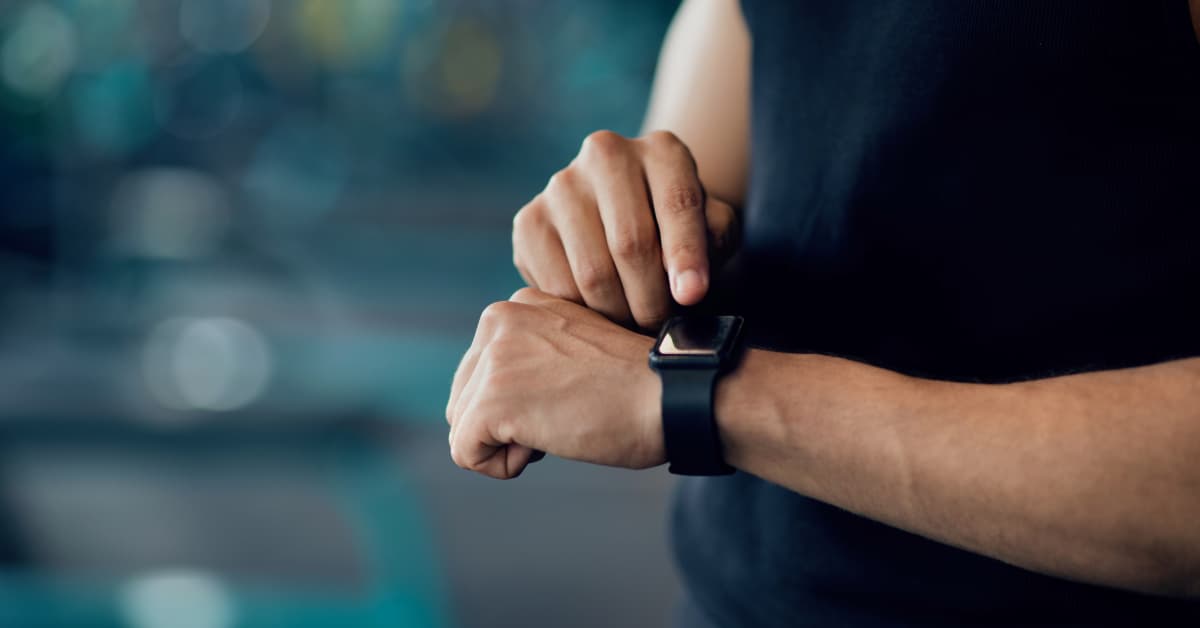
We see them everywhere on the gym floor at O2 Fitness. Whether it’s an Apple Watch lighting up during a HIIT class, a Garmin tracking a long run, or a Fitbit buzzing to remind you to move, smartwatches have become our constant workout companions.
They promise to track everything: our heart rate, calories burned, sleep quality, and even our stress levels. But as you glance down at your wrist after a grueling session, you might wonder: Is this number actually right?
Let’s dive into the science behind the sensors and find out just how much you should trust your wearable.
The Heart Rate Monitor
Most modern fitness trackers use optical heart rate sensors (photoplethysmography or PPG). These sensors shine green light into your skin to measure blood flow.
- The Verdict: For steady-state cardio (like a 30-minute jog on the treadmill or a session on the elliptical), they are generally accurate, often within 5% of a medical-grade chest strap.
- The Flaw: During high-intensity interval training (HIIT) or heavy lifting, your arm moves rapidly, and your muscles contract tightly. This can disrupt the sensor's contact with the skin. You might notice a "lag" where your watch says your heart rate is 120, but you know you’re gasping for air at 160.
O2 Fitness Tip: If you are training specifically for heart rate zones, consider pairing a chest strap monitor with your watch for better precision.
The Calorie Count
We all love seeing that we burned 600 calories in a spin class. However, calorie tracking is notoriously difficult to get right.
- The Verdict: Most studies suggest smartwatches overestimate calorie burn (sometimes by as much as 20% to 90%)
- Why? Algorithms rely on averages. They don't know your specific muscle mass, metabolic efficiency, or hormonal state. Two people who weigh 160 lbs might burn calories at very different rates depending on how much muscle they carry.
O2 Fitness Tip: Use the calorie count as a relative metric rather than an absolute one. If you usually burn "400 watch-calories" in a workout and today you burned "500 watch-calories," you definitely worked harder, even if the exact number isn't perfect.
Step Counting
The accelerometer inside your watch is designed to detect motion patterns that look like walking.
- The Verdict: This is usually the most accurate feature on your device. While it might accidentally count a few steps while you’re folding laundry or whisking eggs, it gives you a solid picture of your daily activity levels.
Sleep Tracking
Sleep tracking uses movement and heart rate variability to guess whether you are in Deep, Light, or REM sleep.
- The Verdict: It’s getting better, but it’s not a sleep lab. A watch can struggle to differentiate between "lying still and awake" and "light sleep."
- The Value: The real value here is the trend. If your watch consistently says you are getting less REM sleep on nights you drink alcohol or look at screens late, that is actionable data you can use to improve your recovery.
The Bottom Line: Trends Over Totals
So, should you throw your smartwatch away? Absolutely not!
These devices are incredible tools for accountability and consistency. The exact number of calories burned matters less than the fact that you showed up to the gym. The exact heart rate beat-per-minute matters less than seeing your resting heart rate lower over time as you get fitter.
How to get the most out of your tracker:
- Tighten the strap: A loose watch can’t read your pulse accurately.
- Update your profile: Ensure your weight, height, and age are current in the app.
- Focus on progress: Look at your weekly and monthly trends rather than obsessing over daily numbers.
Ready to close those rings? We’ll see you at the club!

.png)