





.png)
Have you ever helped a friend move a heavy couch and felt your back start to hurt? Or maybe you've picked up a bag of groceries and felt your shoulders strain? These everyday moments show why functional strength training matters so much.
It's not just about lifting heavy weights or looking strong. Functional strength about building a body that works well in real life.
Strength training should do more than help you hit a personal record on the bench press. It should help you play with your kids, carry laundry up the stairs, and move through your day without pain or fatigue. Let's break down what functional strength training really is and how you can start building it today!
What is Functional Strength Training?
Functional strength training develops your muscles to work together, rather than in isolation. For example, the leg extension machine trains your quadriceps. But there are almost no movements that you do in daily life that use just your quads. Instead, your body relies on integrated patterns: hip hinges, squats, rotations, carries, and pushes and pulls that involve your core, stabilizer muscles, and multiple joints simultaneously.
Here's what makes true functional training different from standard strength training workouts:
-
Multi-joint, multi-plane movement. Life doesn't happen only in straight lines. You twist, reach diagonally, and change directions quickly. Good functional training includes these kinds of movements too.
-
Unilateral (single-side) training. Most things you do aren't perfectly even on both sides—carrying a suitcase in one hand, stepping up a curb with one leg leading. So functional training practices these one-sided movements on purpose.
-
Core stability over core mobility. Most people think "core workout" means twisting and crunching. But most of the time, your core's real job is to stay strong and steady while the rest of your body moves, like when you're carrying something heavy without letting your body tip to one side.
-
Ground-based, free-weight movement. Machines guide your joints along a fixed path. Real life doesn't. Free weights and bodyweight movements force your smaller, stabilizer muscles to do their job like they do in everyday situations.
Why This Matters More Than Raw Strength
A person who squats 300 pounds but has never trained single-leg stability can still struggle to catch their balance on uneven ground. Functional strength training closes that gap by training the system, not just the muscle.
1. It reduces injury risk in real-world moments
Most everyday injuries don't happen from lifting something heavy—they happen from lifting something awkwardly, off-balance, or unexpectedly. Training stability and multi-directional strength prepares your body for those moments.
2. It builds transferable strength
Strength that only shows up under a barbell, in a straight line, under ideal conditions, is limited. Functional training builds strength that holds up when conditions aren't ideal, like when you're off-balance, twisted, or moving quickly.
3. It protects your joints long-term
Training through full ranges of motion, in multiple planes, keeps your joints resilient rather than just strong in one narrow pattern.
Functional Strength Exercises That Actually Hold Up
Here's a more precise breakdown—including why each movement earns its place, and where common exercise lists get it wrong.
Squats and Split Squats
Squats train the sit-to-stand pattern you use dozens of times daily. But split squats and step-ups deserve equal attention, since they train single-leg stability the way walking, climbing stairs, and recovering your balance actually demand.
How to do it: For a split squat, stagger your stance with one foot forward and one back, lower your back knee toward the floor, then push back up. Keep your torso upright and core braced.
Deadlifts (and Single-Leg Variations)
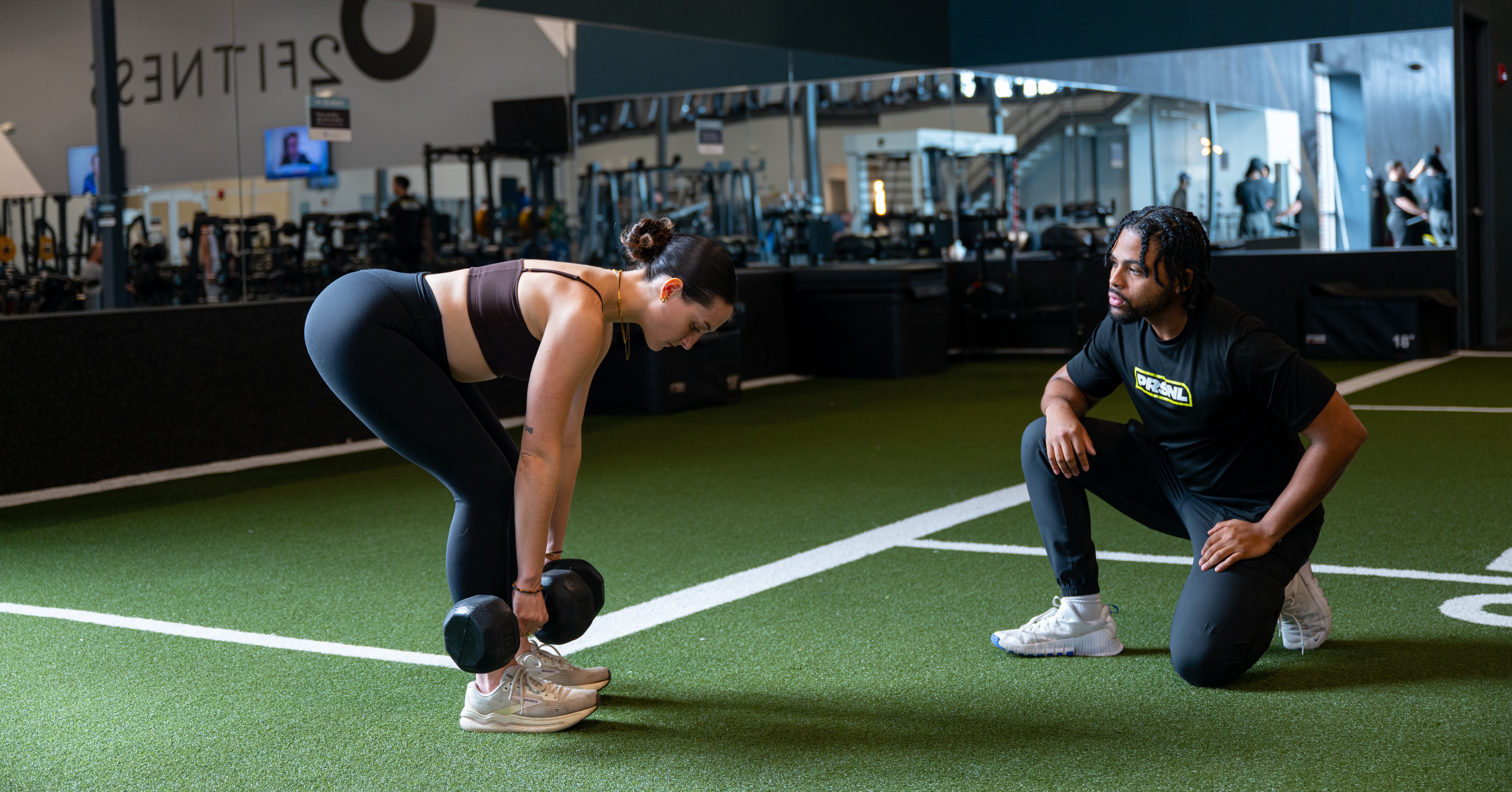
The deadlift trains the hip hinge—the exact pattern you use picking up a laundry basket or a child off the floor. Single-leg RDLs (Romanian deadlifts) take this further by training the hinge under imbalance, closer to how you actually bend down in real life (rarely with both feet perfectly planted and even).
How to do it: Standing on one leg, hinge forward at the hip while extending your other leg straight back for balance, then return to standing. Keep your back flat throughout.
Farmer's Carries and Suitcase Carries
Farmer's carries (weight in both hands) build grip and total-body bracing. But suitcase carries (carrying weight in just one hand) are arguably more functional, since they force your core to resist side-bending, exactly like carrying a heavy bag or a toddler on one hip.
How to do it: Hold a weight in one hand, walk a set distance while keeping your torso upright and resisting the pull to one side, then switch hands.
Standing Cable or Band Presses (Instead of Push-Ups)
Push-ups are a solid bodyweight exercise, but they don't closely mimic real-world pushing. Real pushing (like opening a heavy door, pushing a stalled shopping cart, pushing yourself up off a chair) happens standing, often through one arm, with force generated through your legs and core, not just your chest and arms.
How to do it: Standing in a split stance, press a band or cable forward at chest height, driving through your back leg and bracing your core as you extend your arm.
Rows and Pulling Movements
Most generic exercise lists (including many "functional training" articles) forget pulling entirely. But daily life involves just as much pulling as pushing—pulling open doors, pulling a suitcase, pulling yourself up. Single-arm rows are essential for shoulder health and posture, and they balance out all the pushing patterns most people over-train.
How to do it: With one hand on a bench or one knee planted, pull a dumbbell up toward your ribcage, squeezing your shoulder blade back at the top.
Anti-Rotation Core Work (Not Twisting)
Exercises like Russian twists load your spine into rotation under fatigue—a pattern that can actually aggravate the lower back rather than protect it. In real life, your core's job during rotational tasks (reaching into a backseat, swinging a golf club) is usually to control rotation through your hips and upper back, not to grind through your lumbar spine.
A better foundational movement is Pallof presses, which train your core to resist rotation, are closer to how your core actually functions when carrying uneven loads or bracing against a push.
How to do it: Hold a band or cable at chest height, anchored to your side. Press it straight out in front of you and hold, resisting the pull that wants to rotate your torso toward the anchor point.
Train for Life, Not Just the Gym
Building real functional strength takes more than picking a few good exercises. It takes the right balance of movements, proper progression, and a plan built around your body. That's exactly why O2 Fitness Clubs gives you two easy ways to get started:
Train with the PRSNL app. Get access to workouts built by certified personal trainers, designed around functional movement patterns like the ones above. Whether you're just starting out or looking to level up, PRSNL gives you a structured plan you can follow right from your phone.
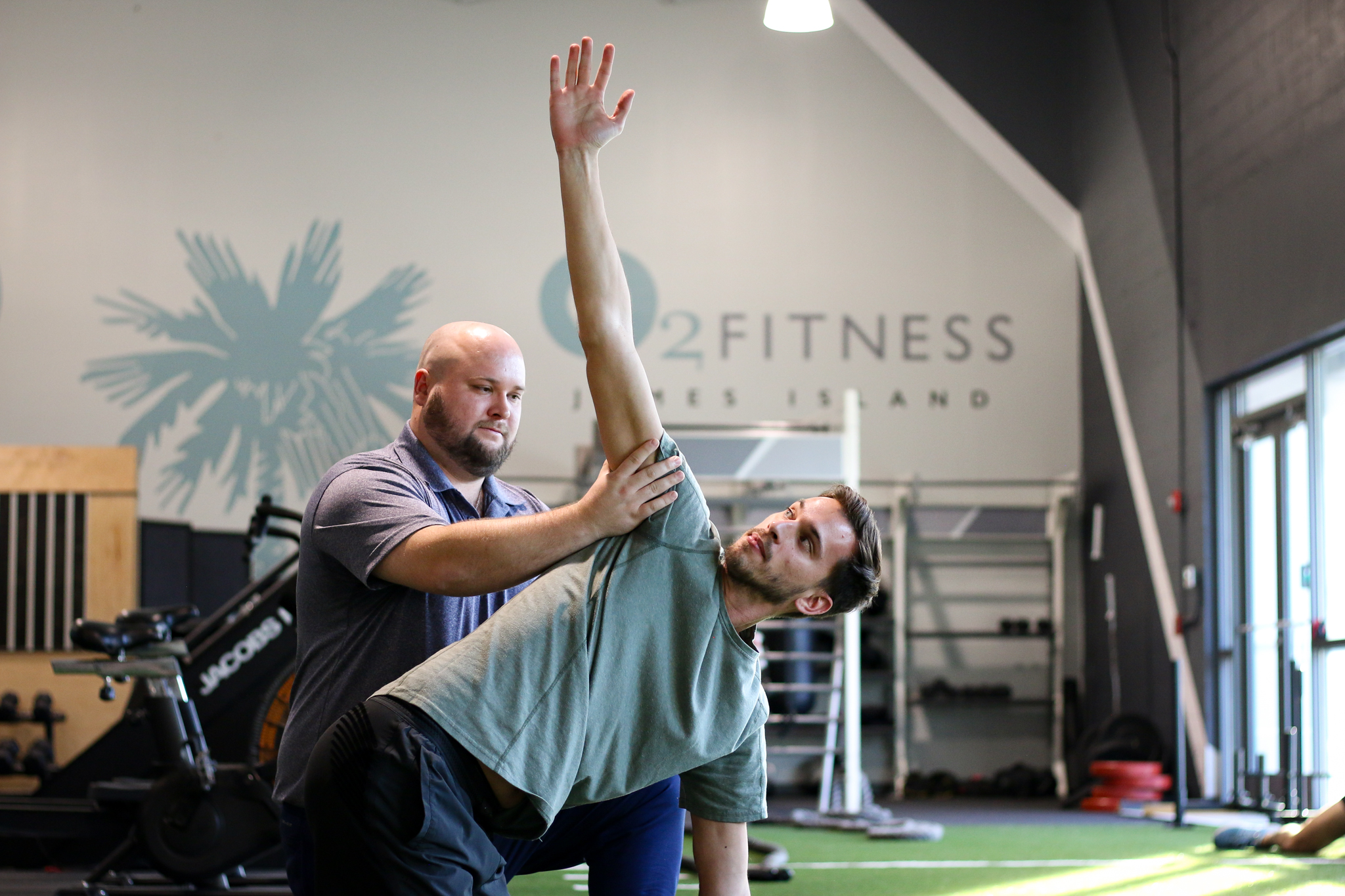
Talk to our PT team. Nothing replaces a trainer who can watch how you move, spot imbalances, and build a program around your body and goals. Our personal training team at O2 Fitness Clubs can assess your movement, correct your form, and help you train smarter (not just harder.)
Ready to build strength that works for you outside the gym? Download the PRSNL app or stop by yourlocal O2 Fitness Club to connect with our personal training team today!