






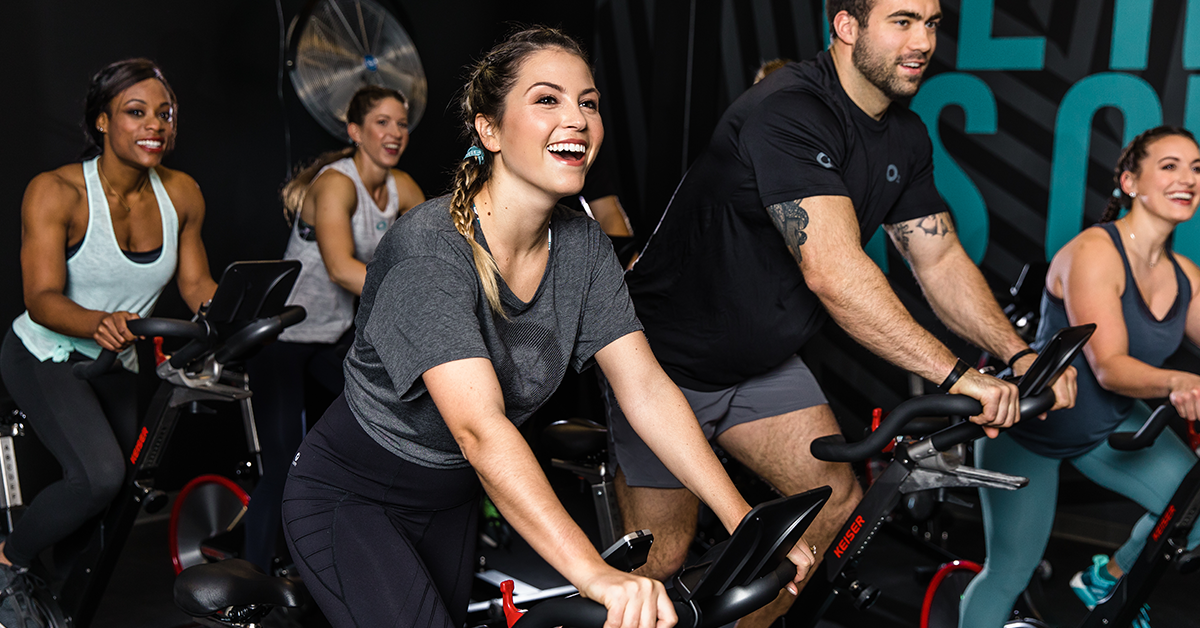
If you've already read our Indoor Cycling 101 guide, you know how to set up your bike, find the right resistance, and show up ready to work. That foundation is everything.
But once the basics click, a new question tends to come up:
Am I actually getting better?
The answer is in your metrics. Those numbers on the screen aren't just there for show. They tell you exactly how hard you're working and whether you're making progress. Here's what each one means and how to use it.
The Four Metrics That Matter
1. Cadence (RPM)
Cadence is how many times your legs complete a full pedal rotation per minute. It measures your speed on the bike.
Here's a simple way to think about it:
-
60–70 RPM is a warm-up or recovery pace
-
80–90 RPM is a steady, working effort
-
100+ RPM is a high-speed interval or sprint
The key is pairing your cadence with the right resistance. Spinning fast on low resistance might feel intense, but you're not generating much real force. Slow, controlled pedaling on high resistance builds strength. The combination of the two is where the magic happens.
Quick tip: If you're bouncing in the saddle, your resistance is too low. Add a little tension to smooth things out.
2. Resistance
Resistance is the amount of tension on the bike's flywheel. It's what makes pedaling feel easy or hard.
Too little resistance and you're just spinning without getting much out of it. Too much and your form breaks down, which puts stress on your knees and back.
The goal is a challenge you can control (heavy enough to feel it in your legs, but light enough to keep your movement smooth and steady).
A simple way to build strength over time: try holding a slightly higher resistance than usual for an extra 30 seconds each week before backing off. Small increases add up fast.
3. Power (Watts)
Power combines your cadence and resistance into one number. It shows your total output at any given moment.
This is the most honest metric on the bike. Your heart rate can change based on how much sleep you got or how stressed you are. But your wattage doesn't lie. More watts means more work.
Start by noting the wattage you can hold comfortably for 10 to 15 minutes. Then use that as your benchmark. Over time, if you can hold that same number with less effort (or push a higher number for longer) you're getting stronger.
4. Heart Rate (BPM)
Your heart rate shows how hard your cardiovascular system is working. Over time, it also shows how well you're adapting to training.
A simple way to estimate your max heart rate: subtract your age from 220. So if you're 40, your estimated max is around 180 BPM.
From there, think in zones:
-
Easy (Zone 1–2): Light effort, good for warm-ups and recovery rides
-
Moderate (Zone 3): Comfortably hard, sustainable for longer stretches
-
Hard (Zone 4–5): Pushing your limit, reserved for intervals and sprints
One common mistake is spending every ride in that middle zone — working hard enough to feel tired but not hard enough to see big changes. Mix in more easy rides and more true hard efforts, and you'll start to notice real improvement.
Putting It All Together
Here's a simple way to structure your next 45-minute ride using these metrics:
Warm-Up (5 min): Easy pace, light resistance, 75–85 RPM. Just get your body moving.
Steady Effort (10 min): Settle into 85–90 RPM with moderate resistance. Find a rhythm you could hold for a while.
Strength Work (10 min): Lower your cadence to 70–80 RPM and add heavy resistance. Feel it in your glutes and hamstrings.
Fast Legs (8 min): Drop the resistance and push your cadence to 100–110 RPM. Focus on staying smooth, not bouncing.
Sprints (5 min): Three rounds of 30 seconds all-out, followed by 30 seconds easy. Give everything you have.
Cool-Down (7 min): Ease back, slow your pace, and let your heart rate come down before you get off the bike.
Ready to Ride Smarter?
You don't have to figure this out on your own. Our instructors and PRSNL coaches at O2 Fitness are here to help you understand your numbers, set realistic goals, and build a plan that gets you real results.
Clip in, check your metrics, and see what you're capable of.
Want more guidance? Talk to an O2 Fitness coach or check out our group fitness schedule to find the right class for your goals.

.png)