






.png)
Your feed is full of nutrition advice. Health coaches, nutritionists, and influencers all post high-protein recipes with #nutritionist in the caption.
So who should you listen to? And who should you book when you want real help with food?
The short answer:
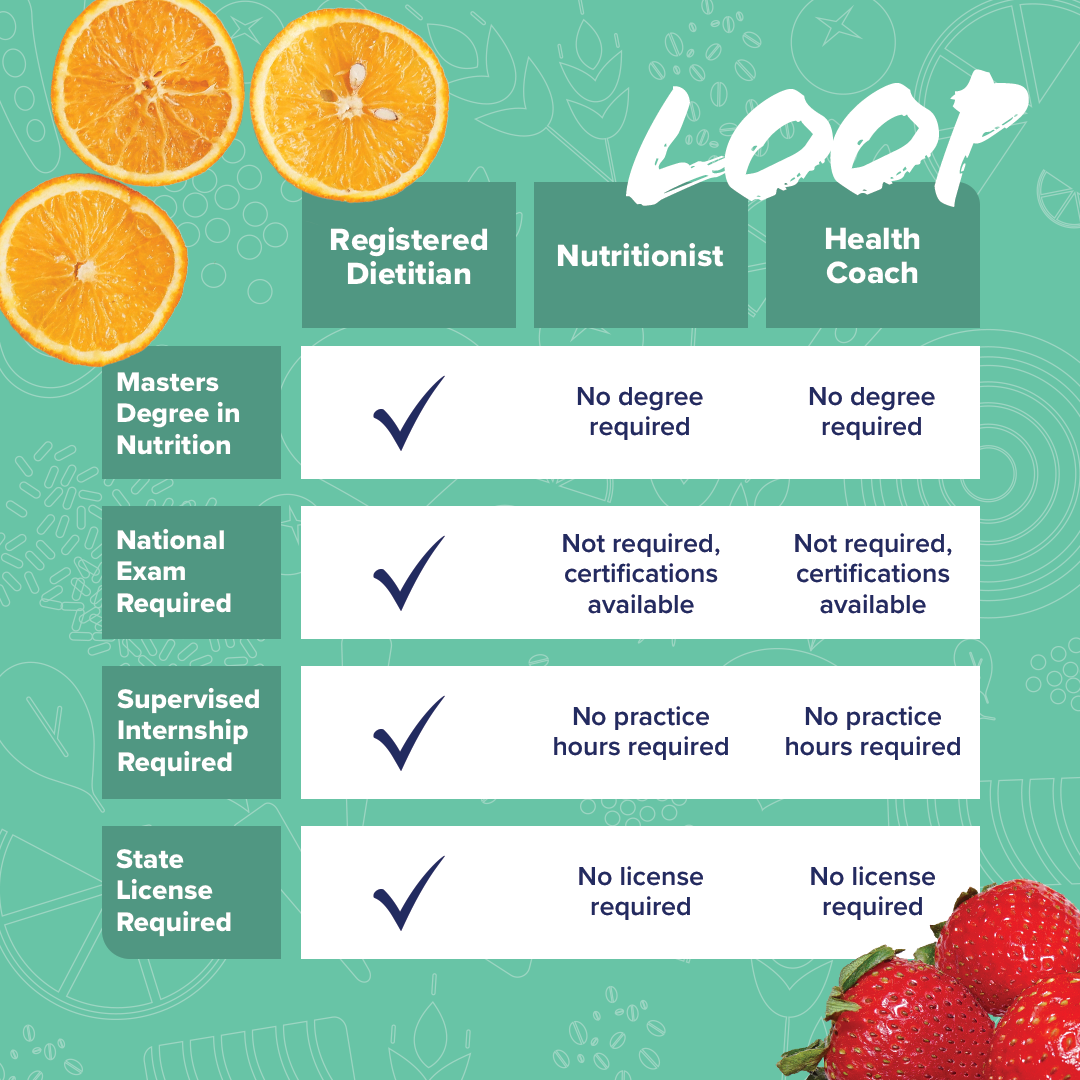
- Registered dietitian (RD or RDN): A board-certified, state-licensed nutrition expert. Of the three, only an RD is trained to give medical nutrition therapy for conditions like diabetes, heart disease and kidney disease. Insurance often covers it.
- Nutritionist: A general title. In many states, anyone can use it, with or without training.
- Health coach: Helps you build habits and stay consistent. Training varies, and certification is optional.
All dietitians are nutritionists. Not all nutritionists are dietitians.
What is a registered dietitian?
A registered dietitian, also called a registered dietitian nutritionist (RDN), has met national standards set by the Commission on Dietetic Registration. To earn the credential, a dietitian has to:
- Complete a graduate degree (required for anyone sitting for the exam since 2024)
- Finish at least 1,000 hours of supervised practice
- Pass a national board exam
- Keep up with continuing education to stay credentialed
Most states also license dietitians, the same way they license nurses.
What that means for you: an RD can help with everyday eating and with medical needs. That includes medical nutrition therapy, which is a nutrition plan built around a diagnosis like type 2 diabetes, high cholesterol, high blood pressure or kidney disease.
You'll find dietitians in hospitals, doctors' offices and public health programs. You'll also find them at your gym. Loop Nutrition's dietitians meet with clients in person inside O2 Fitness clubs.
What is a nutritionist?
"Nutritionist" is a catch-all title. The rules change from state to state, and many states don't require a degree, exam or license to use it.
Some nutritionists have strong training, like a nutrition science degree or the Certified Nutrition Specialist (CNS) credential. Others took a weekend course. You can't tell which from the title alone.
Before you work with a nutritionist, ask:
- What degree or certification do you have?
- Who issued it, and do you have to renew it?
- Are you licensed in this state?
- Can you work with my medical condition, or would you refer me to someone else?
What is a health coach?
Health coaches help you change your habits and keep them. They're trained in skills like motivational interviewing and goal setting, and they can help with sleep, stress, movement and daily routines.
Certification is optional. The most widely recognized one comes from the National Board for Health & Wellness Coaching (NBHWC).
Health coaches don't write medical nutrition plans or treat health conditions. A good coach knows when to send you to a dietitian or a doctor.
Dietitian vs. nutritionist vs. health coach, side by side



.png)